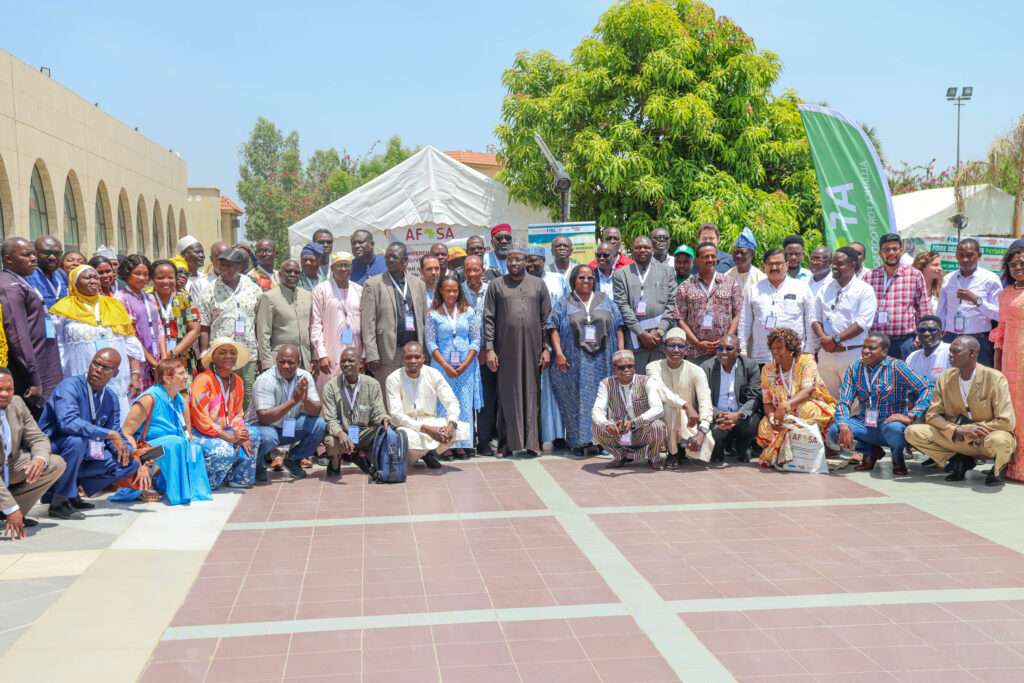
Participants of the 4th Pan-African Conference on Seed Governance call for the full recognition, protection and implementation of farmers’ rights and seed sovereignty across Africa.
Date: 2–4 June 2026 | Location: N’Djamena, Republic of Chad |
A Historic Gathering in the Heart of Africa
From 2 to 4 June 2026, the Alliance for Food Sovereignty in Africa (AFSA) convened the 4th Pan-African Conference on Seed Governance in N’Djamena, Republic of Chad. Bringing together farmers’ organizations, civil society organizations, women and youth movements, academics, researchers, parliamentarians, local governments, regional institutions, and development partners from 20 African countries, the conference culminated in the adoption of a landmark declaration on the future of Africa’s farmer-managed seed systems.
The N’Djamena Declaration arrives at a critical moment. Farmer-Managed Seed Systems (FMSS) remain the backbone of African agriculture — providing 90% of seeds used by millions of farmers across the continent — yet they face growing threats from restrictive seed laws, corporate concentration, and digital technologies that risk converting Africa’s biological heritage into private assets.
“Africa’s seeds belong to its peoples. The future of seed governance must be rooted in sovereignty, justice, biodiversity, democracy and the rights of farmers.”
What the Declaration Says: Six Core Affirmations
The declaration makes six fundamental affirmations that participants from across the continent endorsed collectively:
- Farmers’ Rights are non-negotiable and must be fully recognized, protected and implemented across Africa — including the right to save, use, exchange, improve, reproduce and sell farm-saved seed, consistent with the ITPGRFA and UNDROP.
- Farmer-Managed Seed Systems are autonomous and legitimate — not transitional pathways into commercial seed systems — and must never be subordinated to corporate seed sector interests.
- Seed diversity is central to Africa’s resilience — local varieties, landraces, and indigenous knowledge systems are strategic assets for climate adaptation, nutrition, and community well-being.
- Farmers — especially women — are indispensable custodians and innovators who must be recognized and represented in all seed governance decision-making processes.
- Biodiversity, seeds and associated knowledge are collective heritage and public goods that must not be enclosed, privatized or appropriated through intellectual property systems or corporate concentration.
- Digitalization and bio-digitalization must be governed in ways that protect community rights, prior informed consent, benefit-sharing, and African control over biological and digital resources.
What the Declaration Demands
The declaration calls on African Union Member States to develop seed laws and plant variety protection legislation that strengthen customary farmer seed practices. It urges Regional Economic Communities to ensure the AU’s FMSS Policy Framework explicitly protects farmers’ rights and prevents regulatory overreach. It calls on governments to include farmer-managed seed systems in national agricultural investment plans, climate adaptation strategies, and public budgets — with dedicated financing.
Development finance institutions and donors are called upon to align agricultural investments with agroecology, biodiversity conservation, and farmer-led innovation — rather than promoting narrow, input-intensive models. Parliamentarians are urged to champion legal reforms that guarantee democratic oversight of seed, biotechnology, and data governance policies. And civil society, farmer organizations, and social movements are called to strengthen continental solidarity and accountability mechanisms to monitor implementation of the FMSS agenda.
“The future of Africa’s food systems depends on the protection of farmers’ rights, the strengthening of agroecology and the enhancement of farmer-managed seed systems.”
What AFSA and Partners Commit To
The declaration closes with a set of concrete commitments made by participating organizations and movements: building stronger alliances for seed sovereignty across Africa; supporting community seed banks and farmer-led breeding initiatives; promoting legal and financial frameworks that strengthen rather than undermine farmer-managed seed systems; monitoring the implementation of the AU FMSS Policy Framework; working for the protection of farmers’ rights in the digital age; and advocating for fair governance of Digital Sequence Information and African data sovereignty — including engaging African States on a sui generis Plant Variety Protection system under the AfCFTA Intellectual Property Protocol that reflects African social, cultural and economic realities.