AFSA Delegation’s Closing Reflection | Yerevan, Armenia | 31 October 2026
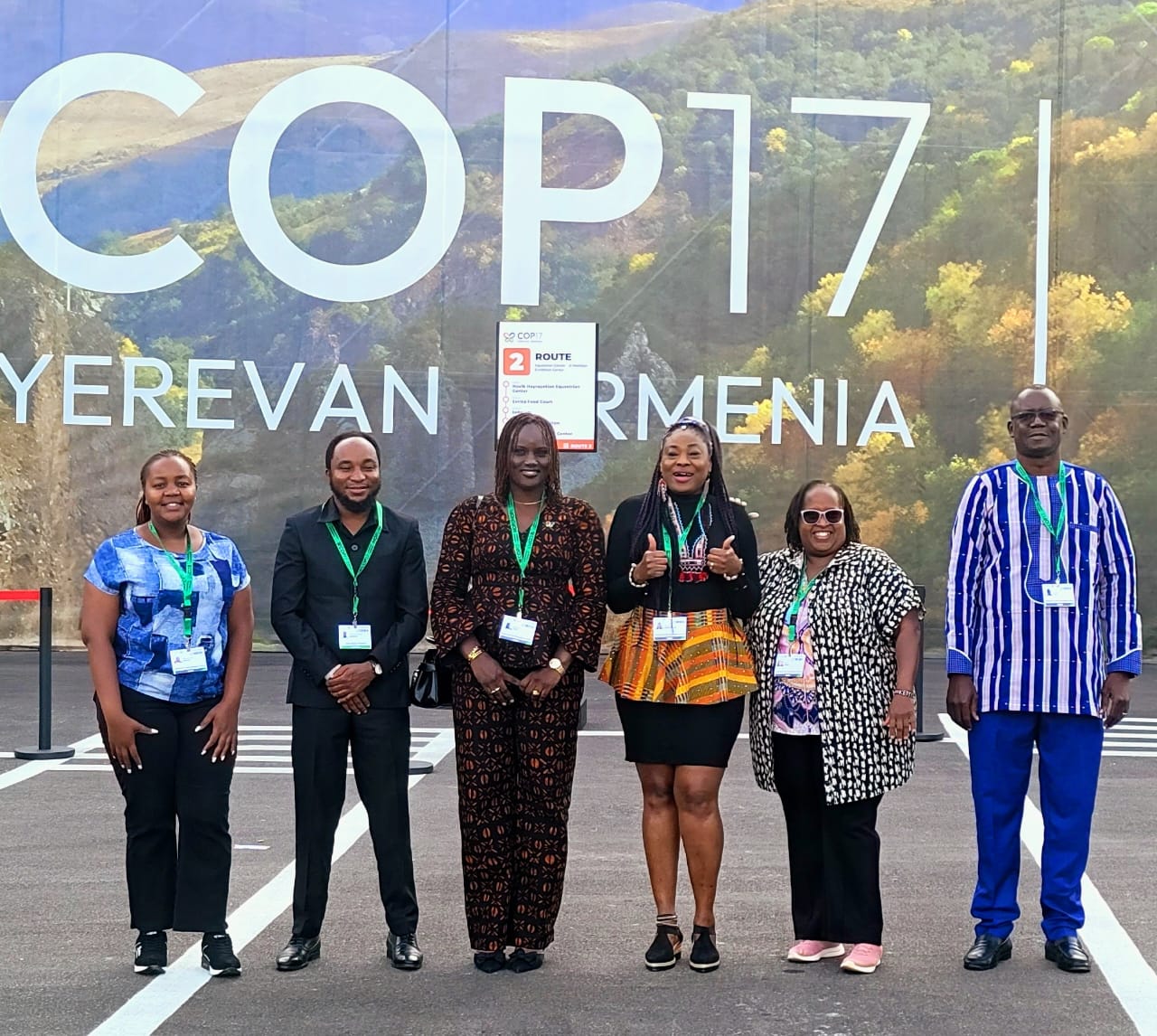
The world cannot continue negotiating the future of biodiversity while the communities who sustain it struggle to protect their seeds, lands, knowledge and livelihoods. This was the conviction that guided the Alliance for Food Sovereignty in Africa (AFSA) throughout the 17th Conference of the Parties to the Convention on Biological Diversity (CBD COP17) in Yerevan, Armenia. Over two intensive weeks, our six-member delegation stood alongside African farmers, Indigenous Peoples, local communities, youth movements and civil society allies to defend a simple but fundamental principle. Biodiversity justice must put people, rights and nature before corporate interests.
COP17 delivered the Yerevan Pathway and completed the first global review of progress under the Kunming-Montreal Global Biodiversity Framework. The findings were sobering. The world remains off track to meet its 2030 biodiversity targets, while inadequate financing, harmful subsidies and gaps in implementation continue to undermine progress. For AFSA, this reinforces a central concern. Global commitments mean little unless they bring meaningful change to the communities conserving biodiversity every day. We cannot continue financing the destruction of nature while promising to restore it.
Throughout the conference, AFSA carried Africa’s priorities into negotiation rooms, high-level panels, side events and public mobilisation spaces. We defended farmer-managed seed systems and the right of farmers to save, use, exchange and share their seeds. We championed agroecology as a practical pathway to biodiversity conservation and food systems transformation, consistent with Target 10 of the Global Biodiversity Framework. We challenged the promotion of false solutions, including approaches to synthetic biology that fail to adequately address equity, precaution, sovereignty and community rights. We called for fair and transparent benefit-sharing and a Cali Fund that genuinely serves the farmers and communities whose stewardship of genetic resources makes scientific and commercial innovation possible.
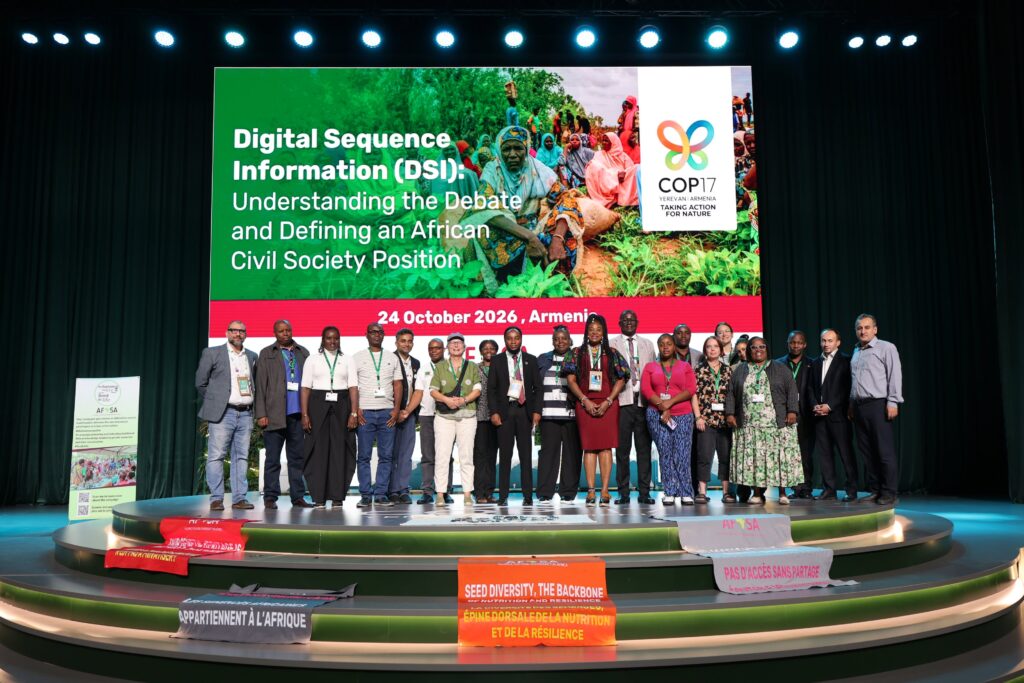
A major highlight of our engagement was AFSA’s side event on 24 October, titled “Digital Sequence Information (DSI): Understanding the Debate and Defining an African Civil Society Position.” Organised in collaboration with African civil society partners, the event brought the critical questions of equity, biodiversity sovereignty and community rights to the centre of the DSI debate. It provided a platform to examine how the growing use of digital genetic information affects Africa’s biological resources and the communities that have conserved them for generations. At the heart of the dialogue was a fundamental question. Who benefits when biodiversity becomes digital, and who has a voice in deciding how those benefits are shared? The event reinforced AFSA’s call for fair, transparent and accountable benefit-sharing arrangements, stronger protection of traditional knowledge and farmers’ rights, and coordinated African civil society advocacy to ensure that scientific innovation advances biodiversity justice rather than deepening existing inequalities.
Our delegation amplified these demands through strong interventions, strategic alliances and collective action. From the call to “Stop financing destruction!” to the pan-African campaign “Seed Is Life”, AFSA reaffirmed that Africa’s agricultural biodiversity is a living heritage, not simply a resource for commercial exploitation. Our engagement with the Just Transformations Network and other civil society allies strengthened solidarity across movements. As negotiations reached their final stages, we stood with young people inside the Blue Zone, raising our voices against false solutions and reminding world leaders of a truth too often forgotten. “You cannot eat money!”
We leave Yerevan with renewed solidarity, stronger alliances and a clear sense of the work ahead. Progress in global biodiversity governance must be judged not only by negotiated decisions, but by whose rights are protected, who controls resources, who benefits from their use and whether communities have the power to shape their own futures. AFSA will continue working with its members and partners to translate these demands into national policies, community action and sustained advocacy.
COP17 may have concluded, but our message remains uncompromising. No future in false solutions. Yes to real, rights-based solutions. Protect farmers’ seeds. Invest in agroecology. Uphold community sovereignty. Make biodiversity justice a reality.