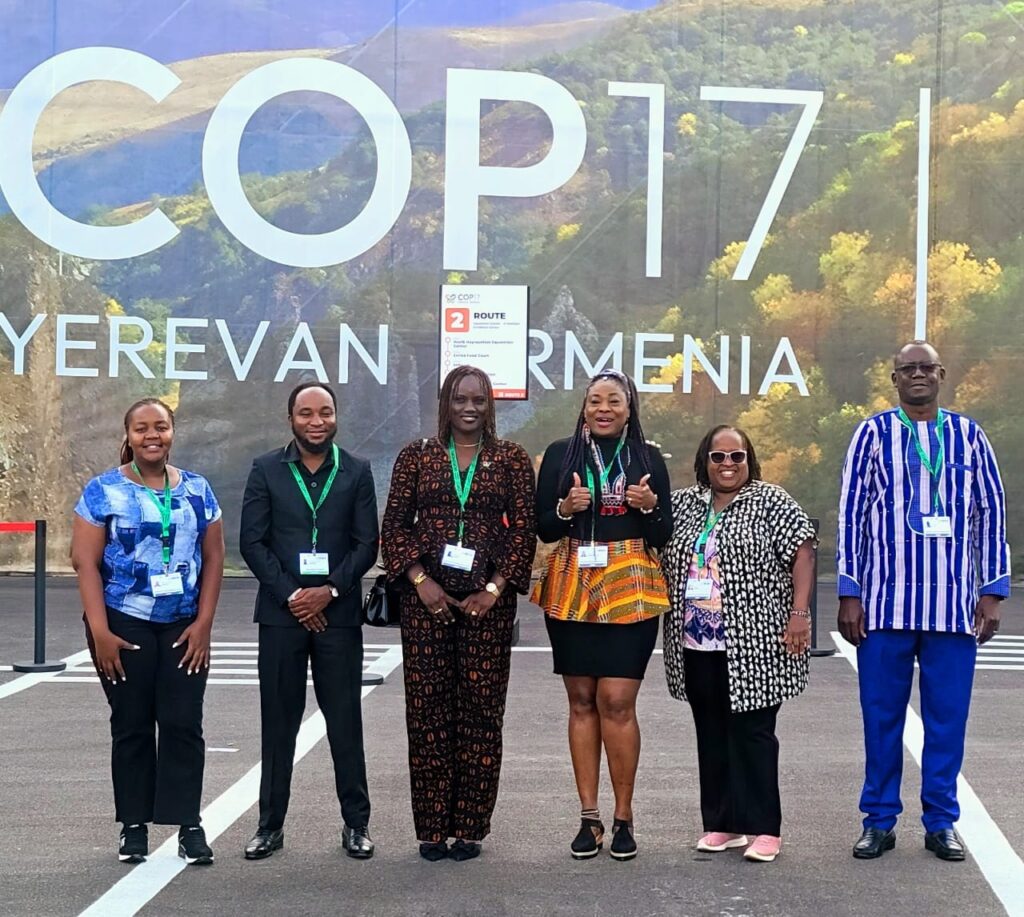
Yerevan, Armenia, 19 October 2026 – A six-member delegation representing the Alliance for Food Sovereignty in Africa (AFSA) has arrived in Yerevan, Armenia, to participate in the 17th Conference of the Parties to the Convention on Biological Diversity (CBD COP17), taking place from 19 to 30 October 2026. The delegation joins global negotiations with a clear message: Africa’s biodiversity cannot be protected without recognising the rights, knowledge and contributions of the farmers, Indigenous Peoples and local communities who have conserved it for generations.
Held under the theme “Taking Action for Nature,” COP17 marks a critical moment for countries to assess progress in implementing the Kunming-Montreal Global Biodiversity Framework and translate global commitments into meaningful action. For AFSA, this means ensuring that biodiversity policies recognise farmer-managed seed systems, safeguard Africa’s genetic resources, protect traditional knowledge and promote agroecology as a practical pathway to healthy ecosystems, resilient food systems and food sovereignty.
Across Africa, millions of smallholder farmers continue to conserve, select, exchange and improve seeds that sustain agricultural biodiversity, food cultures and livelihoods. Yet these vital contributions are often overlooked in global biodiversity policies and benefit-sharing arrangements. Building on its longstanding Seed is Life campaign and advocacy for farmer-managed seed systems, AFSA will engage governments, civil society organisations and international partners to demand stronger recognition of farmers’ rights to save, use, exchange and govern their seeds.
A central focus of AFSA’s engagement will be the growing debate over Digital Sequence Information (DSI) on genetic resources and the fair sharing of benefits arising from its use. As scientific and commercial applications of genetic information expand, AFSA is calling for safeguards that prevent the appropriation of Africa’s biological wealth and ensure that communities who conserve biodiversity receive direct, equitable and verifiable benefits. In particular, AFSA will advocate for the Cali Fund to become a genuine instrument of justice, with transparent governance, meaningful community participation and resources that directly support farmer-managed seed systems, biodiversity conservation and local livelihoods.
AFSA maintains that biodiversity justice must begin with the people who keep biodiversity alive. The success of global biodiversity agreements must therefore be measured by their ability to protect community rights, strengthen local seed systems and ensure that the benefits of conservation and scientific innovation reach those whose knowledge and practices sustain the world’s biological diversity.
AFSA Side Event on Digital Sequence Information
As part of its engagement, AFSA will host a side event titled “Digital Sequence Information (DSI): Understanding the Debate and Defining an African Civil Society Position” on 24 October 2026, from 14:00 to 15:00 (Armenia time), at the Main Stage, Green Zone, Yerevan. The discussion will bring together African civil society organisations, biodiversity advocates and partners to examine the implications of DSI for Africa’s genetic resources, community rights and food sovereignty.
The event will draw on the expertise of biodiversity and seed sovereignty advocates, including Daud Ngosengwa Manongi of the Tanzania Alliance for Biodiversity (TABIO), Lucien Omer Wendyahoda Silga of FIAN Burkina Faso, and Nithin Ramakrishnan, Senior Researcher at Third World Network. The event will be moderated by Mariann Bassey, Deputy Executive Director Environmental Rights Action/ Friends of the Earth Nigeria (ERA/FoEN) and former Chair of AFSA.
Participants will explore common principles for equitable benefit-sharing and develop priorities for a stronger, coordinated African civil society voice in global biodiversity governance.
AFSA invites its members, partners, African government delegations, civil society movements, researchers and biodiversity advocates attending COP17 to join the side event and contribute to this important conversation. Throughout the conference, AFSA will continue working with allies to ensure that Africa’s farmers, communities, women and young people are heard in decisions shaping the future of biodiversity.
Africa’s biodiversity is its living heritage. Protecting it means protecting the people, knowledge and seed systems that sustain it.
Media Contacts
Ndèye Awa GUEYE, CROPS4HD Project Officer, AFSA
awa.gueye@afsafrica.org