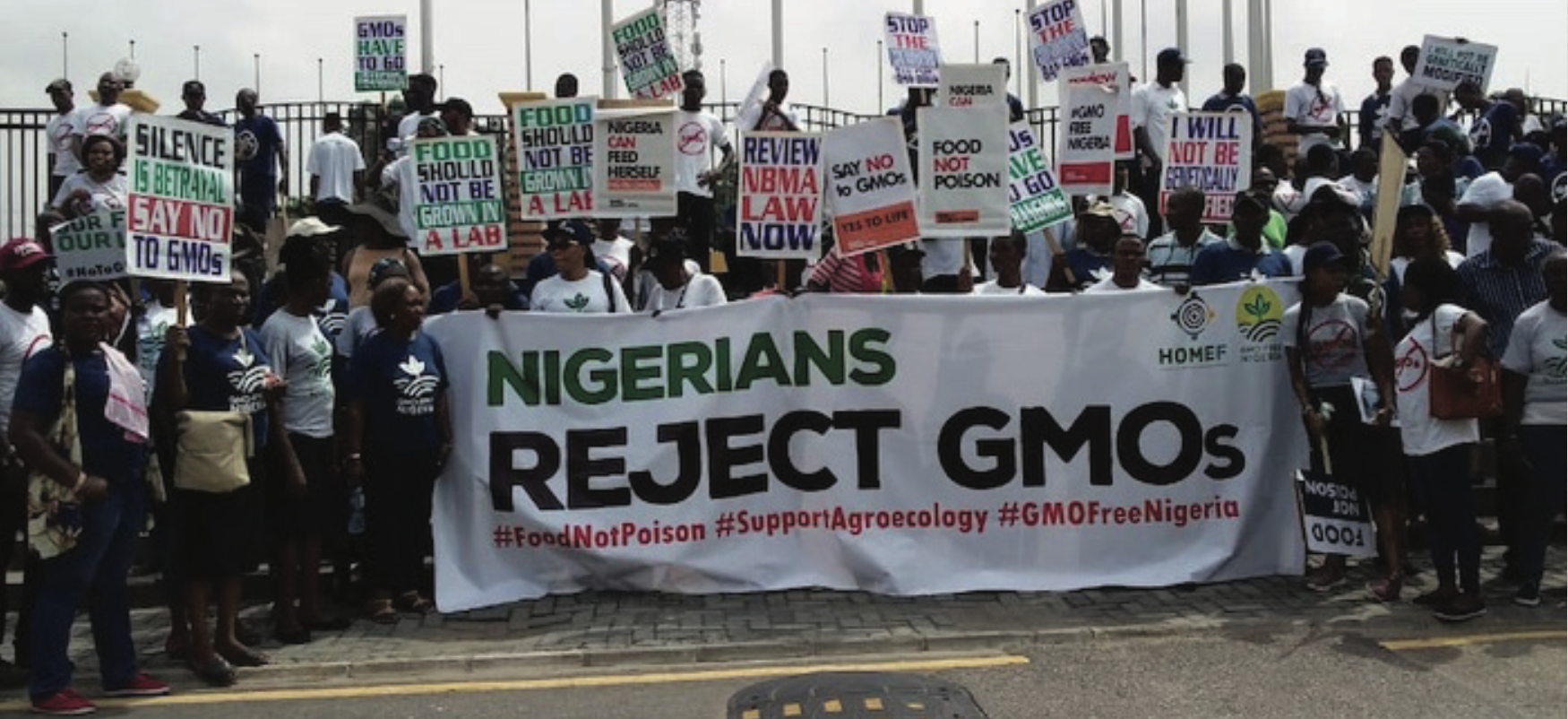
On May 16, 2024, the Nigerian National Assembly took a landmark decision by suspending approvals of new genetically modified organisms (GMOs) in the country. This was followed by a formal investigation into Nigeria’s GMO approval processes and culminated in a public hearing on November 19, 2024, where scientists, farmers, civil society, consumer advocates, and legal experts presented evidence and concerns. The move marks a turning point in Nigeria’s food governance, aligning institutional action with widespread citizen demand for transparency, biosafety, and accountability.
For years, farmers, advocacy groups, and citizens raised alarms over unchecked GMO proliferation, citing weak risk assessments, lack of public consultation, and potential environmental and health risks. The suspension reflects recognition that decisions about food must be rooted in rigorous science, democratic engagement, and a commitment to food sovereignty.
This shift was driven by sustained advocacy from civil society, notably the Health of Mother Earth Foundation (HOMEF), supported by researchers and media. Their efforts included legislative briefings, public awareness campaigns, rallies, press events, and community sensitization. The November 2024 hearing highlighted growing public awareness, with testimonies stressing the importance of biosafety protocols, labeling, and investment in agroecology and traditional seed systems.
Nigeria’s suspension is not a ban but a pause for review and reform. It opens space to build more accountable systems while reinforcing continental initiatives like AFSA’s My Food is African campaign, which defends local seed diversity and traditional food systems. This decision plants seeds of a more transparent, inclusive, and sovereign food future rooted in health, heritage, and human dignity.