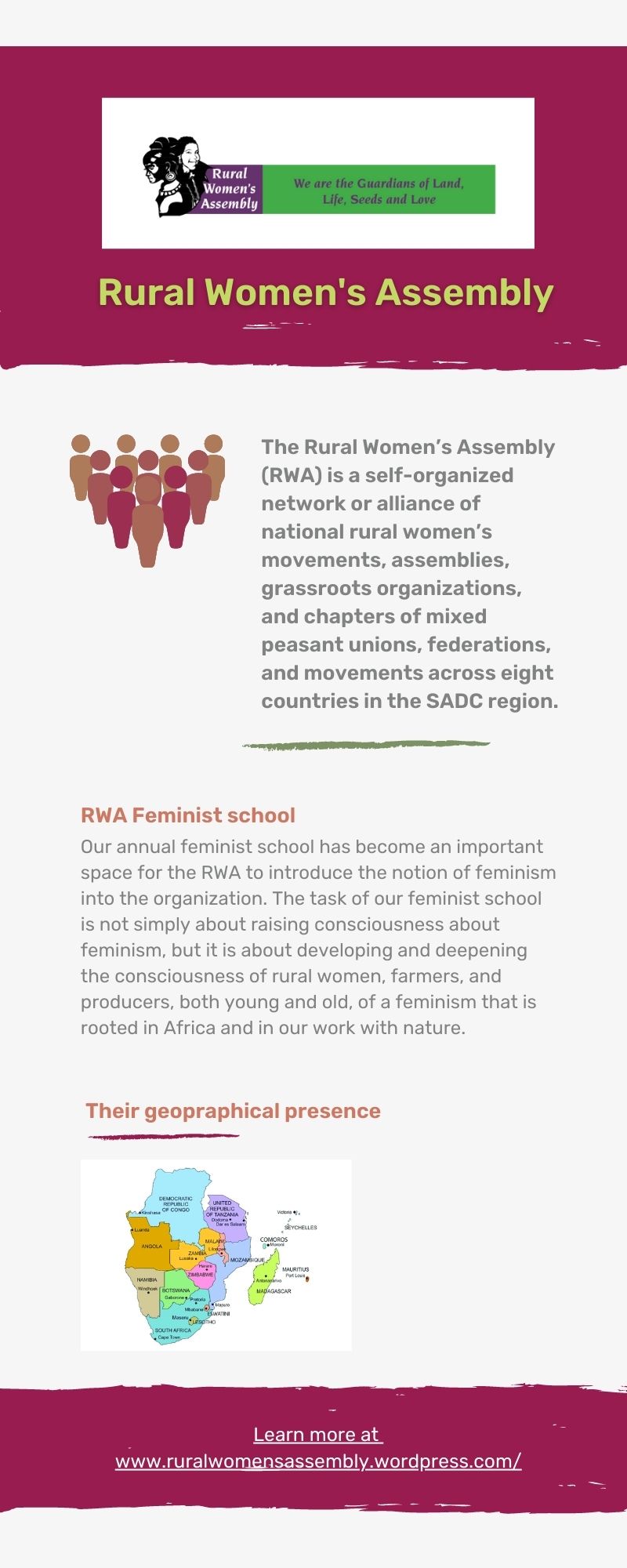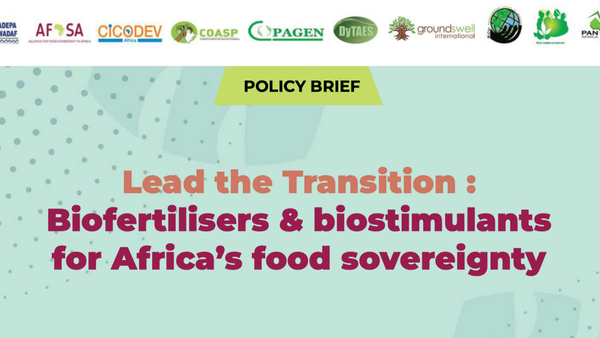

The Alliance for Food Sovereignty in Africa (AFSA) has released a new policy brief calling on African leaders to champion a continental shift from synthetic fertilisers to biofertilisers and biostimulants (B&B) as the foundation of Africa’s soil fertility and food sovereignty strategies. The brief will be officially launched at the Africa Food Systems Forum (formerly AGRA Forum), hosted in Senegal from 31 August to 5 September 2025, where high-level African ministers and policymakers are convening to shape the future of food and agriculture.
Africa’s dependence on imported synthetic fertilisers is a triple threat — undermining economic stability, degrading soils, and draining foreign exchange. Prices of fertilisers have spiked by up to 300% since 2021, while more than 75% of Africa’s soils are already degraded By contrast, biofertilisers and biostimulants restore soil life, enhance resilience to drought, reduce chemical dependency, and create local jobs through youth- and women-led enterprises. They offer a regenerative, low-cost, and homegrown alternative to synthetic fertilisers.
Key Recommendations
The policy brief calls on African governments to:
-
Announce national biofertiliser transition plans — replacing 50% of synthetic fertiliser use by 2030.
-
Redirect subsidies (such as Senegal’s CFA 40 billion budget) toward local B&B production and soil health packages.
-
Develop local infrastructure for composting, microbial inoculant production, quality testing, and community training.
-
Harmonise standards through AfCFTA and regional frameworks, enabling trade and mutual recognition of bio-inputs.
-
Engage SMEs, women, and youth as leaders in production, distribution, and innovation
AFSA stresses that this transition is not only about replacing inputs but about leading a systemic shift towards agroecological soil health. With Senegal well-placed to lead as host of the Forum, biofertilisers and biostimulants represent a “Made-in-Africa solution” to the fertiliser crisis, capable of restoring soils, creating green jobs, and reducing the continent’s external dependence.