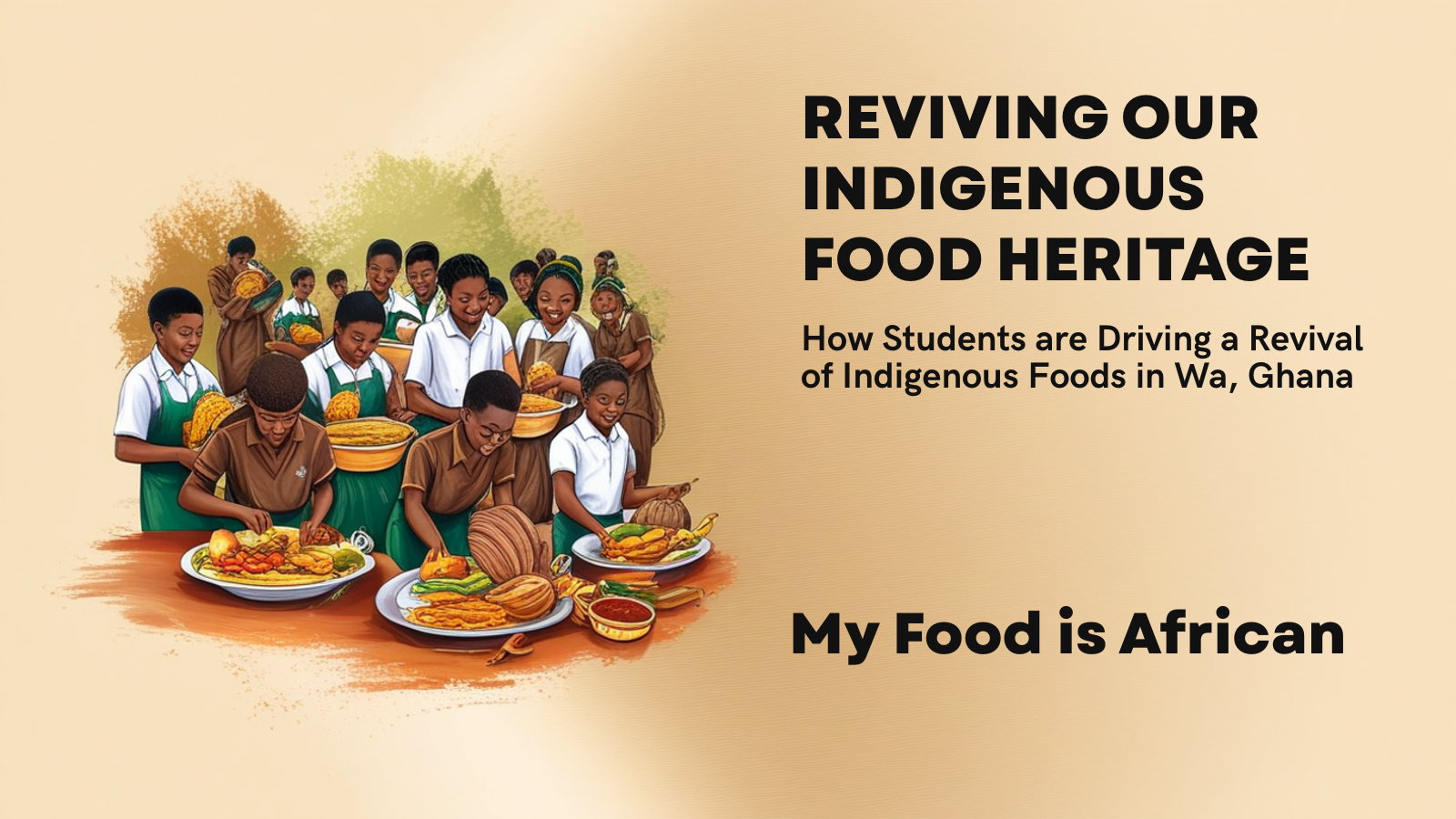

At Wa Municipal Model Junior High School in Ghana’s Upper West Region, a quiet but powerful transformation is underway. Once overlooked, indigenous meals like Koose, wakye, tubani, and yam with palava sauce are now the most sought-after foods on campus. Vendors, many of them women supporting families, are seeing booming sales and renewed pride as students increasingly embrace local dishes over imported fast foods.
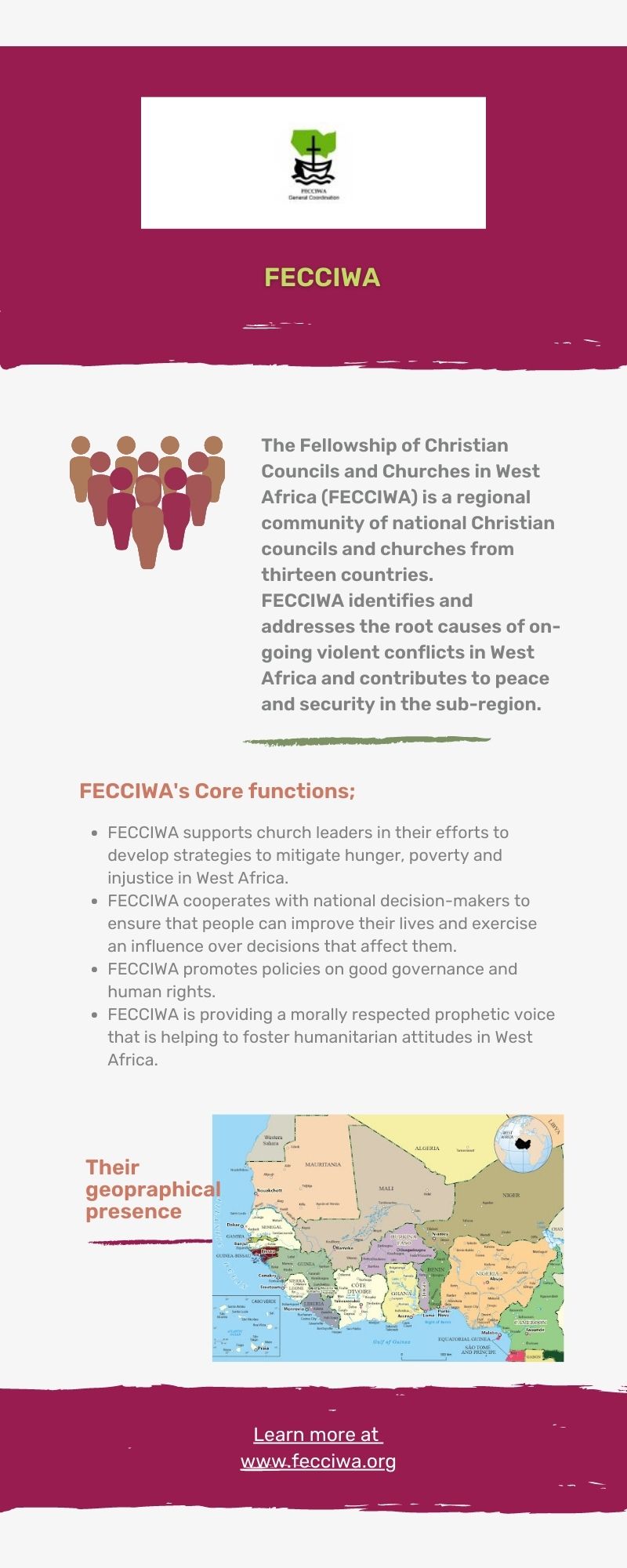
This change, sparked in October 2024, is the result of the Centre for Indigenous Knowledge and Organizational Development (CIKOD)’s work under AFSA’s My Food is African campaign. Through workshops, food fairs, cooking demonstrations, and intergenerational storytelling, students have discovered the health benefits, cultural value, and climate resilience tied to their traditional diets. What was once seen as “old-fashioned” has become fashionable, nutritious, and empowering.
The shift goes beyond taste. Students are leading food clubs, swapping recipes, and inspiring families at home to cook more indigenous meals. Vendors are gaining steady income and confidence, while teachers integrate local foods into lessons on nutrition, biodiversity, and climate. Koose, rich in protein and fiber, now symbolizes a healthier, more sustainable choice—“every Koose a child eats is one less packet of noodles,” as one teacher put it.
With plans for a “Vendor’s Guide to Indigenous Meals” and an annual Local Food Week, the movement is spreading across Wa and beyond. In classrooms, canteens, and communities, students are driving a revival of pride, health, and sovereignty—one Koose at a time.