Reflections from Harare’s Tripartite Celebration of Agroecology in Africa
September 2024
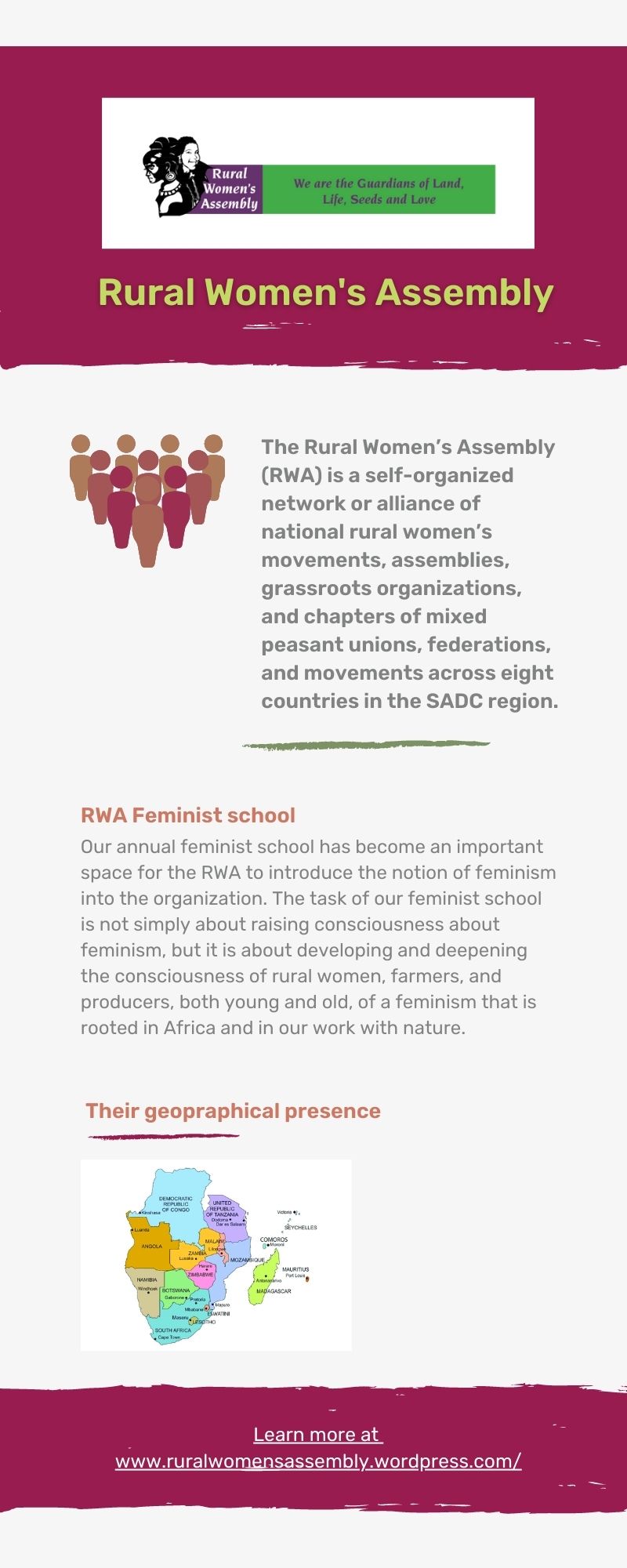
AFSA conducted a transformative event in Harare, Zimbabwe, the first of its kind—a gathering that brought together more than 400 people from over 20 countries across Africa and beyond. The Tripartite Event on African Agroecological Entrepreneurship, the Harare Seed and Good Food Festival, and the 5th Biennial Food System Celebration took place from September 11th to 14th, 2024 (Fig 1). Themed ‘Celebrating Our Healthy African Food Heritage,’ the event was a vibrant mix of farmers, youths, women, entrepreneurs, researchers, and policy actors, all committed to advancing agroecology and creating sustainable food systems for Africa.
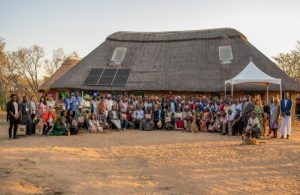
Fig 1. Participants pose for a group photo
What struck us most throughout the event was the deep sense of community and shared purpose. It was clearly articulated that agroecology isn’t just about growing food—it’s about culture, history, and the land. It’s about connecting with and respecting the wisdom of our elders and ensuring that future generations inherit a healthy planet. As we walked through the lively seed and good food festival, where traditional seeds were exchanged and agroecological products were celebrated, we could feel the connection between Africa’s past, present, and future.
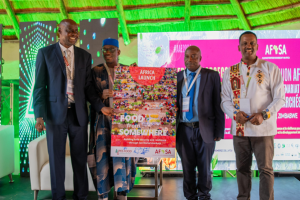
Fig 2: Launch of the “Food from Somewhere” report (From Left to right; AFSA Board Chair, Hakim Baliraine, IRPARD CEO and AFSA honorary member, Mamadou Goita, xxx, and AFSA General Coordinator, Million Belay Ali
The event also focused on the political landscape and its critical role in advancing agroecology. Discussions centered around how countries like Zambia and Uganda are making strides in promoting sustainable agricultural practices. Zambia’s commitment to agroecology was reflected in its policies, such as restrictions on certain GMO imports and the establishment of the National Biosafety Agency. In Uganda, frameworks like the National Environment Management Policy, the National Organic Agriculture Policy, and the national agroecology strategy (draft) aim to promote sustainable farming practices, though gaps between policy intentions and implementation persist. To address these challenges, participants agreed on the need to advocate for comprehensive political frameworks that align with agroecological principles.
Participants recognized that preserving traditional knowledge is vital for the future of agroecology. Efforts to engage youth in agroecology were emphasized, with discussions about integrating traditional farming practices with contemporary methods to create a dynamic learning environment. This approach ensures that knowledge is not only preserved but also actively applied, helping to sustain agroecological practices for future generations.
One of the key takeaways from the event was the collective realization that industrial agricultural models have failed to deliver sustainable food security in Africa. Large-scale, chemical-heavy farming has done more harm than good, depleting our soils, harming biodiversity, and threatening the health of communities.
Agroecology offers a powerful alternative. It is not just an agricultural practice but a way of life that honors Africa’s rich food heritage, protects the environment, and fosters social justice. During the sessions, we heard from agroecological entrepreneurs who are pioneering new ways of growing and distributing food—ways that are more resilient, more sustainable, and more aligned with the rhythms of nature, our heritage and spirituality.
One of the highlights of the event was the Harare Seed and Good Food Festival, a celebration of Africa’s traditional foods and seeds. As we walked through the stalls and tents in festival, we were reminded of how much more food represents beyond just nourishment. It reflected our culture, our values, and our identity.
We met farmers from all over southern Africa who shared stories of their seeds—seeds passed down through generations, carrying with them the history of their families and communities. It was clear that protecting these seeds is not just about conserving biodiversity; it’s about preserving a way of life.
The festival mainly showcased Zimbabwe’s rich seed diversity and traditional farming practices. Farmers from across Zimbabwe and neighboring countries exhibited indigenous seed varieties, some of which had been revived after being considered extinct. The festival promoted the exchange of seeds and agroecological knowledge, reinforcing the importance of seed sovereignty in addressing food insecurity exacerbated by climate change. Techniques such as water harvesting, crop rotation, and the use of organic manure were emphasized as critical practices for enhancing food security and environmental sustainability.
The media reports spotlighted the role of women farmers, particularly from Bikita, Zimbabwe, who participated in the Good Food Festival. Fourteen women showcased their revived indigenous crops, engaging in seed swapping, knowledge sharing, and selling produce. Their participation illustrated the vital role women play in agroecology and the potential of traditional seed varieties to enhance resilience to climate challenges.
The festival reinforced the idea that African food systems are resilient because they are deeply rooted in tradition. By embracing agroecology, we are not only protecting our environment but also ensuring that our food heritage thrives.
While the event was full of hope and celebration, there was also a recognition of the challenges that agroecological entrepreneurs face—especially when it comes to financing. Access to funding remains a significant hurdle for many farmers and entrepreneurs who are committed to agroecology. Although there are emerging opportunities for support, more needs to be done to make financing accessible to those at the grassroots level.
However, it wasn’t all doom and gloom. The event highlighted some exciting developments in agroecological entrepreneurship. We heard from innovators who are finding creative ways to bring agroecologically produced foods to market and developing products that are not only good for the planet but also good for business. We also heard from the panel discussion about progress in various countries to develop policies supportive of agroecology. For example, the commissioner for crop production in Uganda’s Ministry of Agriculture asserted that Uganda has made good strides, consulting widely over the years with farmers, policymakers, and agroecological experts. This consultative process has led to the development of a draft agroecology strategy, which reflects the country’s commitment to agroecology, preserving biodiversity, and promoting resilient food systems.
The most significant outcome of the event was the Harare Declaration of Commitment, where we, the 400+ delegates from 20 countries, pledged to work together to advance agroecology across Africa. It was a powerful moment as we committed to building networks, educating the next generation, and advocating for policy changes that support agroecological farming.
The declaration also called on governments, funders, and stakeholders to step up their support for agroecology. We need policies that protect farmer-managed seed systems, encourage public procurement of agroecologically produced foods, and provide financial incentives for agroecological entrepreneurs. It’s time to move beyond industrial agriculture and invest in systems that are regenerative, sustainable, and rooted in our African heritage.
We were housed in beautifully crafted homes with composting toilets (Fig 3). These toilets transform human waste into compost, which is used to nourish the village’s vegetable gardens. This sustainable approach not only addresses waste management but also contributes to food production, aligning with the principles of agroecology.
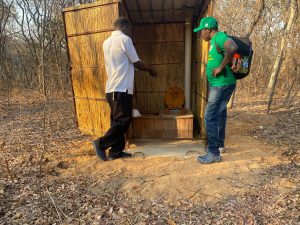
Fig 3: Charles (AFSA Secretariat) inspects composting toilets at Kufunda village in Zimbabwe
As we reflect on our time in Harare, we are filled with a deep sense of hope. The future of African agriculture lies in agroecology, a practice that honors the past while providing a sustainable way forward. The connections we made, the stories we heard, and the collective commitment we witnessed leave us confident that we are on the right path.
But there’s still work to be done. We need to continue raising awareness, building networks, and advocating for policies that support agroecology. Most importantly, we need to ensure that the knowledge and practices of agroecology are passed on to the next generation.
In the spirit of the event’s theme, ‘Celebrating Our Healthy African Food Heritage,’ we left Harare inspired by the potential of agroecology to not only nourish our bodies but also to heal our land, protect our culture, and sustain our communities for generations to come.
Together, we can build a future where Africa’s food systems are not only healthy and resilient but also a source of pride and strength for all.
About the authors: Charles Lwanga Tumuhe, Abbot Ntwali
Abbot Ntwali is the AFSA’s Monitoring and Evaluation Officer with over a decade of experience, he specializes in evaluating interventions in agroecological agriculture. Abbot is passionate about helping organizations in agroecology and food systems achieve their goals and enhance their capabilities.
Charles Tumuhe, a specialist in agricultural extension, rural development, and training, serves as the Healthy Soil Healthy Food (HSHF) Project Officer at AFSA. With 10 years of experience, he oversees capacity-building initiatives of HSHF organizations and has published research on agroforestry, agronomy, participatory community planning, and indigenous seeds and foods.