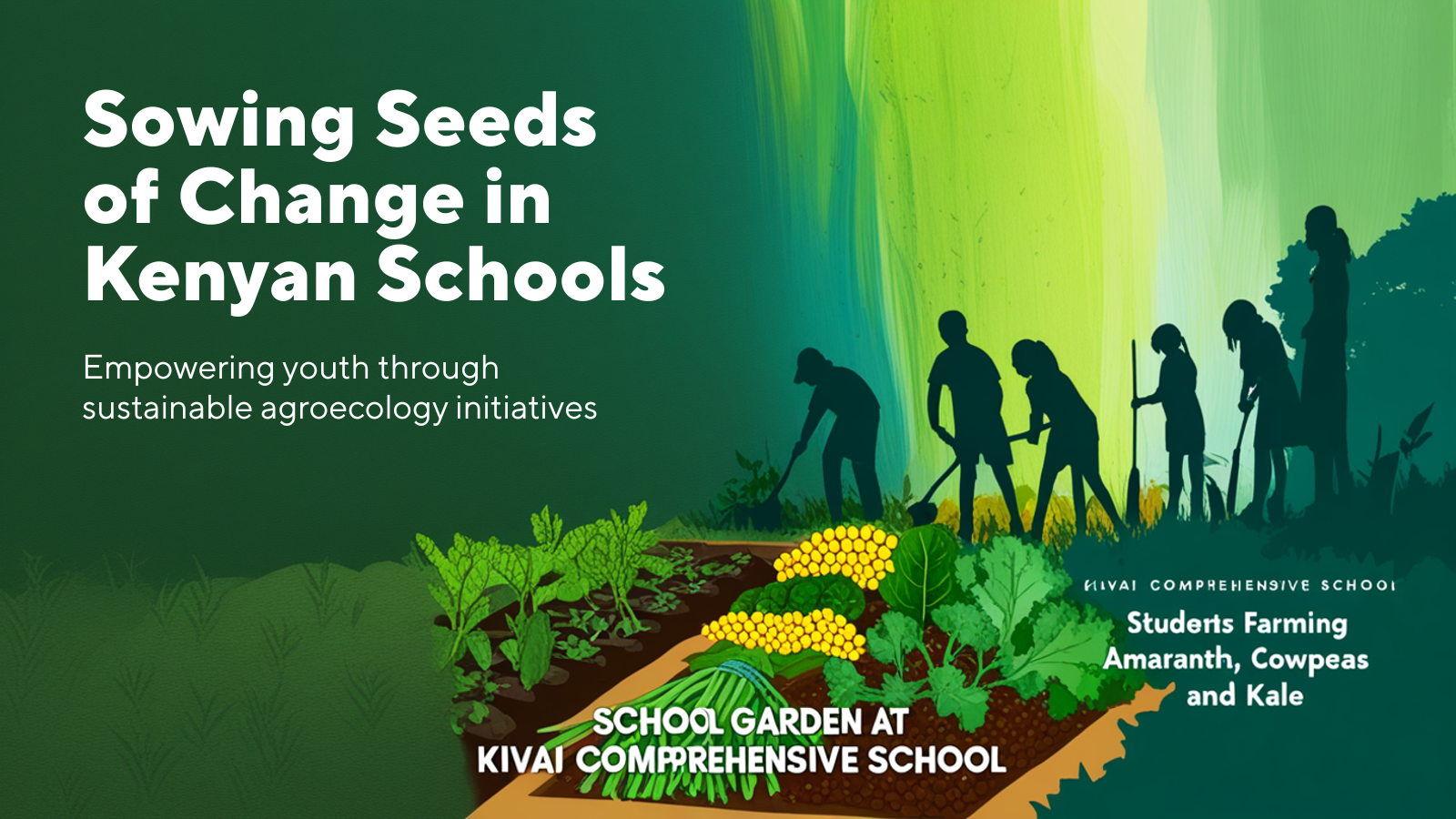

In Makueni County, Kenya, a quiet but profound transformation is taking root. At Kivai Comprehensive School, the sound of morning bells now blends with the rustle of leaves, hoes striking the soil, and students’ laughter as they tend to rows of amaranth, cowpeas, and kale. What began in July 2024 as a simple school policy to use vacant land for indigenous crops has grown into a vibrant initiative redefining food, education, and sustainability.
With support from SCOPE Kenya and Katoloni Mission CBO, and inspired by AFSA’s My Food is African campaign, the school created a thriving garden focused on drought-resistant, nutrient-rich indigenous crops. Today, these gardens feed 120 students daily while teaching practical agroecology skills—soil health, composting, biodiversity, and climate resilience—woven directly into science, home economics, and environmental studies.
The initiative has reshaped learning and behavior: students are proud to consume traditional foods, absenteeism has dropped, and teamwork and responsibility have flourished. The ripple effect is spreading, with neighboring schools in Miwani and Katheka Kai adopting similar gardens, while county education officials explore integrating agroecology into development plans.
For students, this is education that nourishes both body and mind. For communities, it is a revival of resilience and tradition. And for Kenya, it is part of a growing movement rooted in soil, culture, and hope.