
Thiès, Senegal, 12 February 2026
The Alliance for Food Sovereignty in Africa (AFSA), in collaboration with civil society organisations and farmers from West and Central Africa, has expressed deep concern about the sub-regional workshop on the seed sector organised in Abidjan by CORAF (West and Central African Council for Agricultural Research and Development) and FAO (Food and Agriculture Organisation of the United Nations) from 11 to 13 February 2025.
While recognising the importance of regional dialogue on seed systems, AFSA and its partners warn that the current process risks violating farmers’ rights by marginalising the peasant seed systems that are the foundation of food production in Africa. Their rights are, in fact, guaranteed internationally by major legal instruments, namely the United Nations Declaration on the Rights of Peasants and Other People Working in Rural Areas (UNDROP) and Article 9 of the International Treaty on Plant Genetic Resources for Food and Agriculture (ITPGRFA).
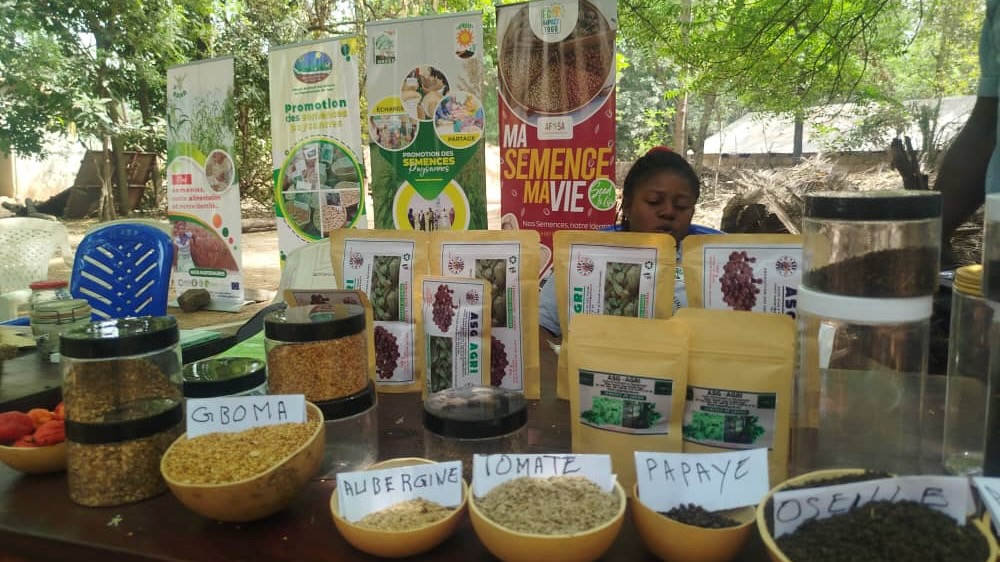
The workshop, which aims to define regional strategies for the seed sector, has largely excluded peasant organisations and civil society actors with long experience of peasant seed systems, including community seed banks and seed boxes, seed fairs and participatory seed development initiatives throughout the region.
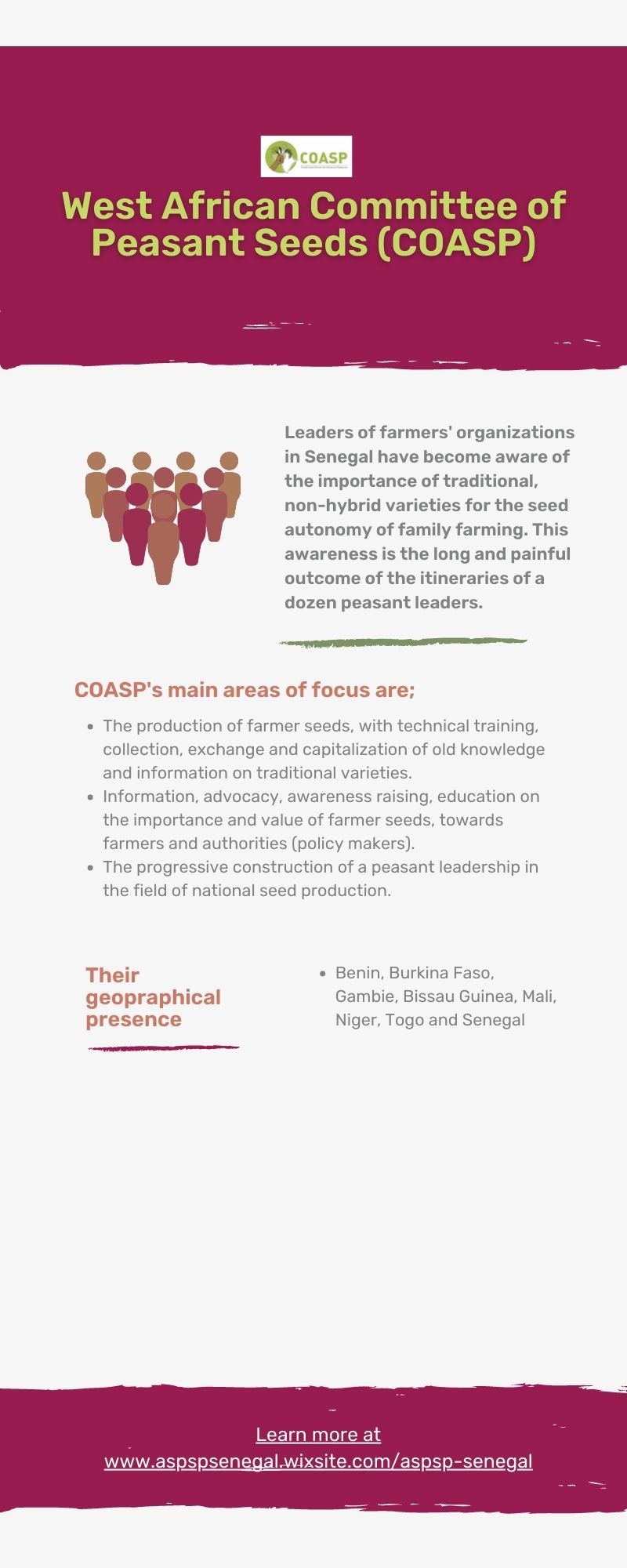
“Any seed strategy that excludes farmers and their organisations is fundamentally flawed,” said Alihou Ndiaye, coordinator of the West African Farmers’ Seed Committee (COASP), a member organisation of AFSA. “Farmers are not peripheral actors. They are the guardians and innovators of the seed systems that feed Africa. Policies must be developed with them, not for them.”
AFSA also expressed concern about the continued use of the term “informal seeds” in policy discussions, even though African Union processes under the Comprehensive Africa Agriculture Development Programme (CAADP) recognise peasant seed systems as essential to agricultural transformation and climate resilience.
According to recent African Union studies, between 80 and 90 per cent of the seeds used by African farmers come from peasant seed systems, but these systems remain poorly supported, if at all, by policies and regulations.
“To label farmers’ seeds as ‘informal’ or inferior is to ignore the reality that these systems provide the majority of seeds used in Africa,” said Famara Diédhiou, coordinator of the AFSA seed working group. “Farmers’ seeds are diverse, resilient and adapted to local conditions. The African Union’s CAADP process now recognises farmers’ seed systems and indigenous seed systems as essential to Africa’s agricultural future, and regional strategies must align with this shift by recognising farmers as the legitimate custodians of our seed diversity.”
Civil society organisations have also criticised current proposals to simplify certification systems, which risk treating farmers’ varieties as inferior. Instead, they advocate for regulatory systems based on equal recognition, but with rules adapted to the nature and diversity of farmers’ seed systems.
CSOs and POs remain very vigilant about the threat posed by UPOV to the seed system in African countries, whose governments are under constant pressure from agribusiness lobbies. This requirement is non-negotiable, as Jean-Paul Sikeli of COPAGEN put it: “We cannot allow the UPOV regime to destroy Africa’s genetic heritage. Our seed systems must protect diversity and farmers’ rights, not impose industrial uniformity.”
AFSA and its partner organisations call on CORAF, FAO and regional institutions to ensure that future processes fully include farmers’ organisations and civil society, to align strategies with the African Union’s new policy directions, and to strengthen peasant seed systems as the foundation of resilient African food systems.
“The future of seeds in Africa cannot be decided in rooms where farmers are absent,” added Mr Ndiaye. “If we want resilient food systems, farmers must be at the centre of policy and investment decisions.”
AFSA and allied organisations remain ready to engage constructively with regional institutions to develop inclusive, farmer-centred seed policies across Africa.
###
See AFSA’s Position Statement here.
Media contacts:
Famara Diedhiou, Alliance for Food Sovereignty in Africa (AFSA) famara.diedhiou@afsafrica.org, WhatsApp +221 77 539 89 28
Jean Paul Sikeli, Coalition for the Protection of African Genetic Heritage (COPAGEN) sikelijeanpaul3@gmail.com, WhatsApp +225 05 92 50 06